Socializing a Cavapoo With Kids, Dogs and Strangers
General training information. Every dog is an individual; for health or behavior concerns, see your veterinarian.
Cavapoos have a good reputation for being friendly. Purina Australia describes the Cavoodle, the same Cavalier King Charles Spaniel and Poodle cross, as friendly, affectionate, sociable and playful. That is a good starting point. It is not a finished job.
Even a sociable dog needs calm, positive practice with the world. This guide walks you through Cavapoo socialization one step at a time, with a focus on children, other dogs and new people.
What to Know About the Breed First
If you are wondering, "are Cavapoos good with kids?", the sources say generally yes. Healthy Paws Pet Insurance describes the Cavapoo as generally good with children, and adds that very small children should be supervised. Elanco's Cavoodle profile describes the cross as generally sociable with other household pets and recommends early socialization.
Those are general statements about a crossbreed with no official breed standard. Individual dogs vary, and so do the breeders and homes they come from. Petful notes that quality varies by breeder because there is no standard. So treat the breed's friendly reputation as a head start, not a promise.
Greencross Vets also says Cavoodles can be alert watchdogs that may bark at strangers, while Healthy Paws rates barking as low. Your dog may land on either side.
Materials You Will Need
- A flat buckle collar or a well-fitted harness, and a standard 4 to 6 foot leash
- Small, soft treats your dog loves, cut into tiny pieces
- A treat pouch so rewards are quick
- A baby gate or exercise pen to create a safe retreat space
- A mat or bed your dog can settle on
- A few chew toys for calm moments
- A calm adult helper, and a friend with a friendly, vaccinated dog
- A notebook to record what went well and what felt hard
Count treats as part of the daily meal amount. Petful lists weight gain from treats as a known Cavapoo challenge, so keep the pieces small.
Step-by-Step Cavapoo Socialization Plan
Step 1: Ask Your Veterinarian About Safe Timing
Before your puppy meets unfamiliar dogs or visits busy public places, ask your veterinarian which vaccines your puppy needs and when it is safe to go out. Do not guess. Your vet knows your local disease risks and can tell you which places to avoid for now.
In the meantime, you can do plenty at home. Let your puppy hear household sounds, meet calm visitors and ride in the car.
Step 2: Build a Calm Base at Home
Socialization works best when your dog already knows a few simple cues, such as sit, come and settle on a mat. Healthy Paws describes the breed as very trainable with positive reinforcement. Petful also calls the breed high in trainability, with the Poodle parent adding intelligence and the Cavalier parent adding eagerness to please.
Practice short sessions with rewards. If you need a full foundation, our complete guide to training a Cavapoo covers the basics step by step.
Step 3: Introduce New People Slowly
Start with one calm adult at a time. Ask the visitor to ignore the puppy at first, then let the puppy approach on its own. When your puppy moves toward the person, reward with a treat.
Keep a few rules:
- Ask visitors not to lean over, grab or pick the puppy up
- Let your dog choose to come close, and let it walk away
- Vary the people: different ages, hats, glasses, deep voices, and people using canes or strollers
- End each session while your dog is still relaxed
If your dog barks at strangers, as Greencross says some Cavoodles do, add distance. Reward calm behavior from a spot where your dog can notice the person without worrying. Then close the gap a little at a time.
Step 4: Introduce Children With Close Supervision
This is where most owners ask about Cavapoos and children, and the supervision piece matters most. Healthy Paws says very small children should be supervised around the breed. Follow that advice every time, not just at first.
Teach the child before you teach the dog:
- Show the child how to pet gently on the shoulder or chest with an open hand, not the face or tail.
- Ask the child to sit down so the puppy can come over, rather than chasing or hugging.
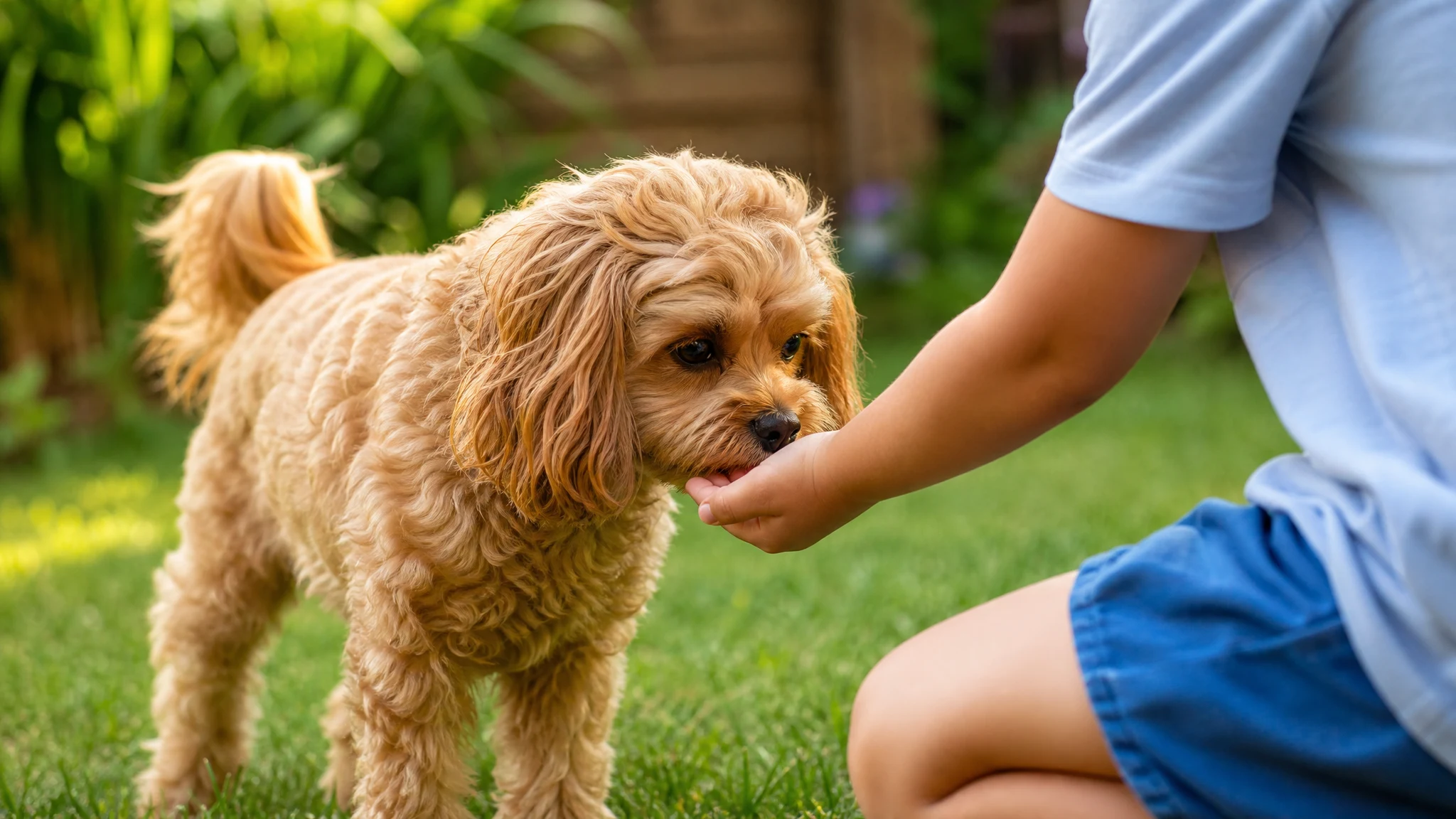
- Let the child hand over a treat on a flat palm, with an adult guiding.
- Keep each visit short, then give the puppy a break in its pen or on its bed.
An adult should be within arm's reach during every interaction. Do not leave a young child alone with any dog. Teach children that a dog on its bed, in its crate or behind a gate is off limits.
Watch your dog's body language. Lip licking, turning away, yawning, a tucked tail or hiding are signs your dog wants space. Step in calmly and end the session.
The sources we relied on do not flag guarding or herding behavior around children for this cross. Petful notes low prey drive. If your dog ever stiffens, growls or guards toys or food near kids, separate them and talk to your veterinarian or a qualified reward-based trainer.
Step 5: Introduce Other Dogs One Step at a Time
Cavapoo with other dogs is often a happy pairing, since Elanco describes the cross as generally sociable. Still, plan the first meetings carefully.
- Start with parallel walks. Walk with a friend and a calm, vaccinated dog, staying a comfortable distance apart. Reward your dog for staying relaxed.
- Close the gap gradually. Let the dogs sniff briefly on loose leashes, then walk on together.
- Move to a safe, enclosed space. A fenced yard that neither dog owns works well. Remove toys and chews first to avoid arguments.
- Keep play short. Call your dog away every minute or two, reward, and let it go back to play if both dogs are enjoying it.
Good play looks loose and bouncy, with dogs taking turns chasing and switching roles. If one dog keeps hiding, freezing or being pinned, take a break.
If you have a Toy-Poodle cross at the smaller end of the range, choose playmates of a similar size at first. Healthy Paws gives an adult weight range of 9 to 25 pounds, so your Cavapoo may be much smaller than some neighborhood dogs.
Step 6: Add Busier Places Gradually
Once your vet says it is safe, visit new places in small doses. Try a quiet street, then a bench near a park, then a pet-friendly store entrance. Bring treats and watch for stress signals. Leave before your dog is overwhelmed.
Do not force your puppy to run or hike long distances. Petful advises avoiding forced running or long hikes on developing joints, and says adult size arrives around 9 to 12 months. Keep outings short and let your dog rest.
Step 7: Teach Your Dog to Be Alone, Too
A well-socialized dog also needs to cope with quiet time. Petful lists separation anxiety as a known Cavapoo challenge, with barking, chewing and house-soiling when left alone. Practice short, calm absences with a chew toy and build up slowly. If your dog shows distress, talk with your veterinarian.
Tips for Success
- Keep it positive. Reward calm, curious behavior. The American Veterinary Society of Animal Behavior supports reward-based training and warns against punishment-based methods.
- Go at your dog's pace. Short, pleasant sessions work better than long, tiring ones.
- Exercise matters. Greencross suggests about 30 to 60 minutes daily, and Petful suggests two short-to-medium walks plus play. A dog that is under-stimulated may chew or act out.
- Watch the coat. Petful notes the coat mats easily. Gentle brushing practice with treats helps your dog accept handling by visitors and groomers.
- Repeat regularly. Healthy Paws notes the breed responds to repetition and routine, so keep a steady schedule.
Common Mistakes to Avoid
- Flooding. Throwing your puppy into a crowd to "get it over with" can build fear, not confidence.
- Letting everyone pet at once. Passing a small dog around is overwhelming.
- Assuming friendly means safe. A sociable breed can still be stressed or nip when handled roughly.
- Leaving kids and dogs alone. Constant adult supervision is the safest approach.
- Forcing greetings. Pulling your dog toward a person or dog can create the very fear you want to avoid.
- Skipping vet advice on vaccines. Ask before dog parks, group classes or busy shared spaces.
- Using harsh corrections. Never use shock, prong or choke collars, or physical intimidation. They can damage trust and make fear worse.
What to Expect
With patient, regular practice, many Cavapoos become comfortable, curious companions around visitors, children and other dogs. That fits the friendly temperament described by Purina Australia and Elanco. Still, results vary from dog to dog and depend on genetics, early experiences and your consistency. Some dogs stay shy, some stay excitable, and progress is rarely a straight line.
If your dog shows persistent fear, aggression, or distress when left alone, ask your veterinarian for advice, and consider a qualified trainer who uses reward-based methods. Health or pain problems can affect behavior, and only a veterinarian can sort that out.