Leash Training a Cavapoo: Pulling, Lunging and Loose-Leash Walking
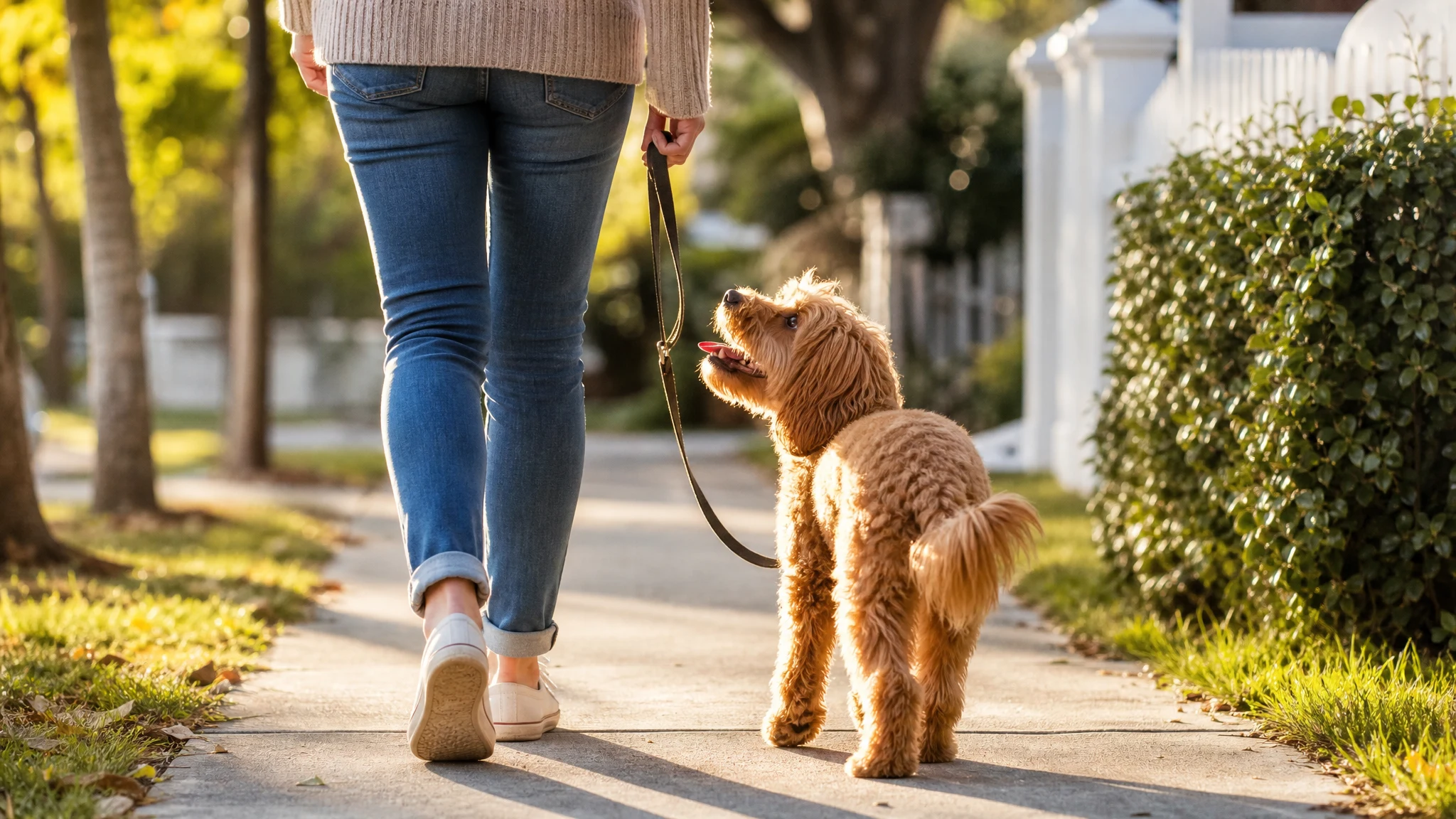
General training information. Every dog is an individual; for health or behavior concerns, see your veterinarian.
Most Cavapoo owners expect a small, sweet dog who trots along happily. Then the leash clips on and the dog hauls toward every leaf, person and smell. Cavapoo leash training is very doable, but it takes patience and a plan.
This guide covers why a Cavapoo pulls, what gear helps, a step-by-step method, and how to handle lunging. If you are still building the basics, start with our complete guide to training a Cavapoo and come back here for the walking skills.
Why a Cavapoo Pulls on the Leash
Pulling is rarely stubbornness. It is usually a dog who has learned that pulling works. Every time a tight leash gets the dog closer to a smell or a person, the pulling is rewarded.
The breed's makeup adds a few things to know. According to Healthy Paws Pet Insurance, the Cavapoo has a low prey drive, so chasing squirrels is usually not the main problem. Healthy Paws and Petful both describe the breed as very trainable. The Poodle side brings intelligence and the Cavalier side brings eagerness to please. That is good news, because a dog who wants to work with you can learn a new walking habit quickly.
The Cavapoo is a companion dog, not an athlete, according to Petful. It is also a crossbreed with no official breed standard, so individual dogs vary. Your dog may be a calm strolling type or an excitable one. Greencross Vets says exercise needs are moderate, about 30 to 60 minutes a day. It also notes that understimulated dogs may chew. A bored, under-exercised dog often pulls harder because the walk is the best part of the day.
In short, a Cavapoo that pulls is usually excited, a bit under-trained and in the habit of being rewarded for it. All three can be changed.
What You Need
- A flat collar or a front-clip harness. Either works. A front-clip harness attaches at the chest, so a pull turns the dog sideways instead of letting them surge forward. Many owners of small dogs prefer a harness because it keeps pressure off the neck. If your dog has any health concerns, ask your veterinarian which fit is best.
- A standard 4 to 6 foot leash. A fixed-length leash gives you steady control. Retractable leashes teach a dog that pulling extends the walk, so skip them for training.
- Small, soft treats. Pea-sized pieces are plenty. Petful lists weight gain from treats as a known challenge for the breed, so count training treats as part of the daily food and use tiny pieces.
- A treat pouch. It keeps rewards at hand so your timing stays quick.
- A quiet place to start. A hallway, backyard or empty driveway works well.
What not to use: prong collars, choke collars and shock collars. They work by causing discomfort, and they can damage trust and make reactive behavior worse. The American Veterinary Society of Animal Behavior (AVSAB) supports reward-based training. Everything below uses rewards only.
How to Leash Train a Cavapoo, Step by Step
Step 1: Get comfortable with the gear
Let your dog wear the collar or harness indoors for short periods. Give a treat each time you put it on, so the gear predicts good things. Then clip on the leash and let them drag it around the house under supervision. Keep sessions short and happy.
Step 2: Teach a reward position
Decide which side your dog will walk on. Stand still with a treat at your hip, and reward your dog each time they stand or sit next to you. Then take one step and reward again when they follow and stay close. This is the foundation of loose-leash walking, and it is simply a dog learning that the spot beside you pays.
Step 3: Reward for a slack leash indoors
Walk a few steps. Whenever the leash hangs in a loose "J" shape, say a cheerful marker word like "yes" and give a treat at your side. Gradually ask for more steps between treats. Practice in a quiet room until your dog does this reliably. Short, frequent sessions of a few minutes work better than one long one.
Step 4: Teach what a tight leash means
When the leash goes tight, stop walking. Stand still and stay calm. Do not yank. The moment your dog eases off, even slightly, or turns back to check on you, mark and reward, then walk on. Your dog learns that tension stops the walk and slack keeps it going.
If stopping alone is not working, turn and walk the other way in a relaxed way. Reward your dog when they catch up to you at your side.
Step 5: Move to the yard, then the street
Add distractions in small steps. Go to the backyard, then the front yard, then a quiet street. At each new place, expect your dog to forget some of what they know. Go back to rewarding often, then thin the treats out again. If your dog cannot take a treat or respond to you, the environment is too hard. Make it easier by adding distance or going somewhere calmer.
Step 6: Build real-world walks
Once your dog does well on quiet streets, use busier routes. Reward for checking in with you, for walking beside you past distractions, and for sitting politely when you stop. Keep the pace steady and keep the leash loose, because a tight leash from you tells your dog to pull back.
Loose-Leash Games to Practice
Games keep practice fun, which suits a sociable, people-focused dog.
- Treat scatter. When your dog gets too excited, toss a few treats on the ground and let them sniff them out. This lowers arousal and rewards calm behavior.
- Red light, green light. Walk, then stop suddenly. Reward your dog for stopping with you. Start walking again on a cue like "let's go."
- Turn and treat. Say your dog's name, turn the other way, and reward when they swing around to follow. This teaches them to keep an eye on you.
- Sniff breaks. Sniffing is how dogs read the world. Use it as a reward: after 20 or 30 steps of loose-leash walking, say "go sniff" and let your dog explore on a loose leash. This gives them what they want without pulling.
- Hand targeting. Teach your dog to touch your palm with their nose. Use it to redirect them past a distraction and back to your side.
Handling Lunging at Triggers
Lunging is different from ordinary pulling. A dog who lunges at other dogs, bikes, cars or strangers may be excited, frustrated or worried. The Cavapoo is described by Purina Australia and Healthy Paws as friendly and sociable. Lunging in these dogs is often about greeting, not aggression. Still, a lunging dog on a leash can be hard to hold, can hurt your shoulder, and can frighten others. Individual dogs vary, so watch your own dog's body language.
Try this approach:
- Find your dog's threshold. This is the distance at which your dog notices a trigger but can still take a treat and think. Stay at or beyond that distance.
- Mark and reward the look. When your dog sees the trigger and does not react, say "yes" and treat. Then give another treat. The trigger starts to predict good things.
- Move away early. If you see a trigger ahead, turn, cross the street or step behind a parked car before your dog reacts. Avoiding the explosion is not failing. It is good management.
- Close the distance slowly. Over many sessions, work a little closer to the trigger only while your dog stays relaxed.
- Stay calm. Do not yell, jerk the leash or punish the lunge. This adds stress and can make the reaction worse.
Do not allow face-to-face greetings on leash while you are working on this. A tight leash can make meetings tense. Let your dog say hello to other dogs only when the dogs are calm and the owners agree.
Early socialization is recommended for the breed, according to Elanco My Pet and I. If lunging is intense, comes on suddenly, or seems linked to fear or pain, talk with your veterinarian first, then consider a qualified, reward-based trainer. Check any trainer's methods before you hire them.
Tips for Success
- Exercise first. A short play session before a training walk takes the edge off.
- Be boring and consistent. Everyone in the household should use the same rules and cues. Letting the dog pull "just this once" teaches the dog to keep trying.
- Keep sessions short. Five to ten minutes of focused practice beats a long, frustrating walk. Petful notes that puppies need short, frequent play and rest.
- Protect growing joints. Petful says adult size arrives around 9 to 12 months, and recommends avoiding forced running or long hikes for developing joints. Keep puppy walks short and easy.
- Reward more than you think you should. Pay well for good walking, especially around distractions.
- Check your own tension. Hold the leash with a relaxed hand. If you grip tight, your dog feels it.
- Plan for alone-time habits too. Petful lists separation anxiety as a known challenge for the breed. A dog who is frantic when left may be extra wound up when you finally head out. If that sounds familiar, raise it with your veterinarian.
Common Mistakes to Avoid
- Jerking or yanking the leash. It teaches nothing useful, can hurt the neck and may turn walks into a fight.
- Using a retractable leash for training. It rewards pulling by giving more line.
- Moving forward when the leash is tight. Each step that follows a pull rewards the pull.
- Skipping the easy steps. Going straight to a busy street sets your dog up to fail.
- Stopping treats too soon. Fade rewards slowly. Your dog may need food or other rewards, like a sniff break, for a long time.
- Using aversive tools. Prong, choke and shock collars are not part of humane training and are not recommended.
- Ignoring pain. A dog who suddenly pulls, yelps or refuses to walk should be checked by a veterinarian. Petful and Elanco list conditions such as patellar luxation and hip dysplasia among the breed's health concerns. Only a vet can tell whether your dog has one.
What Results to Expect
Every dog learns at their own pace, and no method can promise a result. Many Cavapoos are described as intelligent and eager to please, so many owners may notice some improvement within a few weeks of daily practice. A dog who walks politely in the house may still pull on a busy street for a while, and that is normal.
Adolescence, new places and exciting days can cause setbacks. If that happens, return to an easier step, make the rewards better and keep the sessions short. Lunging often takes longer to improve than ordinary pulling, and some dogs need ongoing management around their biggest triggers. Progress is usually gradual, not a straight line.
If you feel stuck, a qualified trainer who uses reward-based methods can watch you and your dog and adjust the plan. Your veterinarian is the right person for any question about pain, behavior changes or health.