Crate Training a Cavapoo and Preventing Separation Anxiety
General training information. Every dog is an individual; for health or behavior concerns, see your veterinarian.
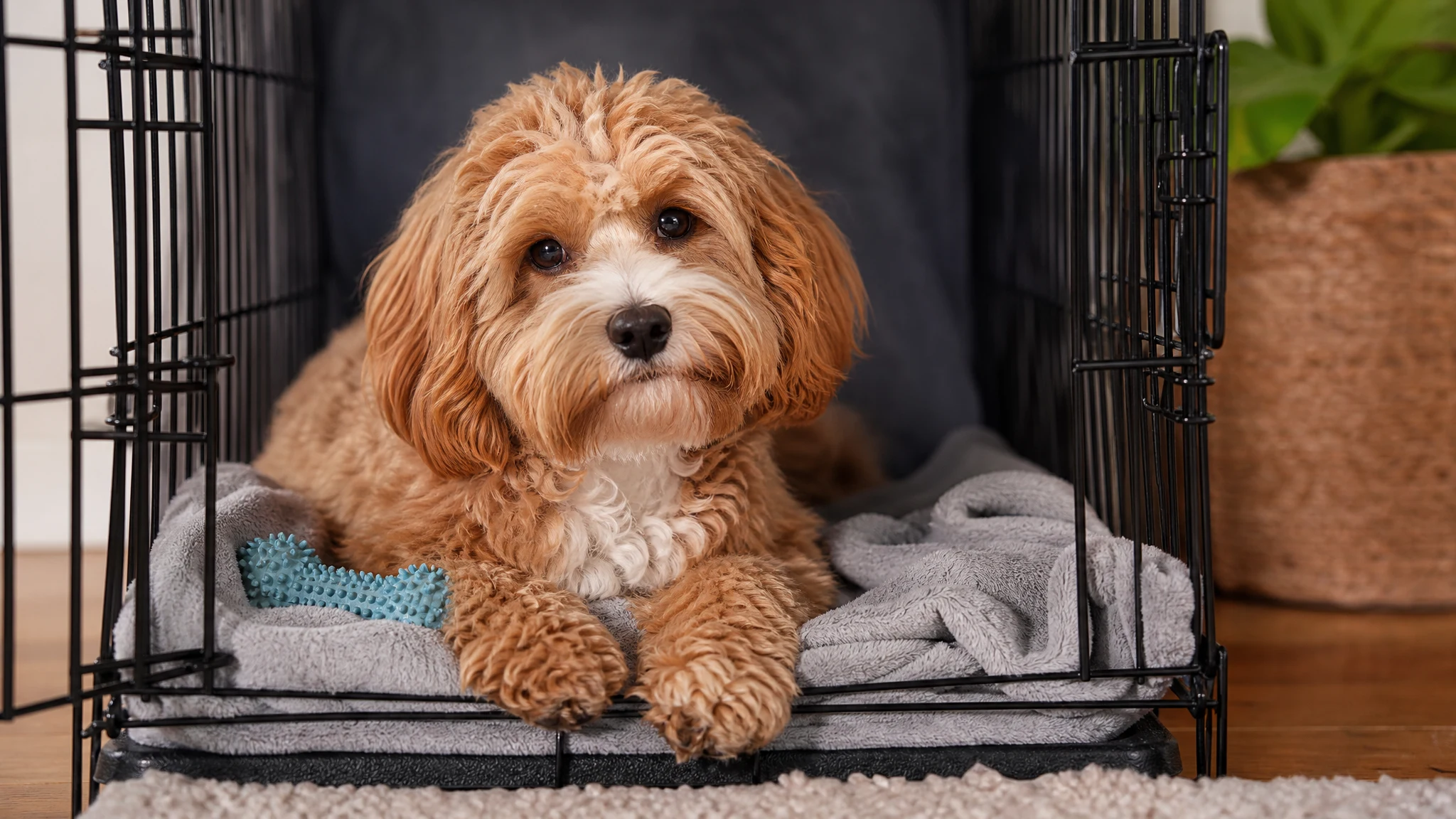
Cavapoos are affectionate, people-loving dogs. That is the charm of the cross, and it is also why some of them struggle when the house goes quiet. Good cavapoo crate training gives your dog a calm, predictable place to rest. It also gives you a gentle way to build alone time before problems start.
This guide walks through crate training a Cavapoo from day one. It covers choosing a crate, introducing it, building up time alone, and spotting early signs of separation distress. It is written for puppies and adult dogs alike. For the wider picture, see our complete guide to training a Cavapoo.
Why the Cavapoo Needs Thoughtful Alone-Time Training
The Cavapoo is a cross of a Cavalier King Charles Spaniel and a Poodle, usually a Toy or Miniature Poodle. There is no official breed standard, so individual dogs vary. Still, the sources describe a pattern. Petful lists separation anxiety, with barking, chewing and house-soiling when left alone, among the known challenges of the cross.
The same sources also give you good news. Petful and Healthy Paws Pet Insurance both describe the Cavapoo as highly trainable. The Poodle side brings intelligence, and the Cavalier side brings an eagerness to please. Healthy Paws says the cross responds well to positive reinforcement, repetition and routine. That is exactly what crate training needs.
A crate is not a cure for anxiety, and it is never a punishment. Think of it as a den your dog chooses, paired with a slow plan for being alone.
Materials You Will Need
- A crate of the right size. See the sizing section below.
- A soft, washable mat or bed that fits the floor of the crate.
- Small, soft treats. Cut them tiny. Petful notes that Cavapoos can gain weight from treats, so count training treats as part of the daily food.
- A safe chew or stuffable toy. Pick one sized for a small dog and supervise the first few uses.
- A crate cover or light blanket (optional), to make the crate feel more den-like.
- A baby gate or exercise pen for a safe area near the crate.
- A timer or phone to track short practice sessions.
Step 1: Choose the Right Crate Size
Cavapoos are small, but not all the same size. Healthy Paws Pet Insurance gives an adult height of 9 to 14 inches and an adult weight of 9 to 25 pounds. Petful gives 12 to 25 pounds. The spread depends largely on whether the Poodle parent was a Toy or a Miniature.
Healthy Paws and Petful both say adult size comes around 9 to 12 months. So size the crate for the adult dog you expect, not the puppy you have today.
- Your adult Cavapoo should be able to stand up, turn around and lie down stretched out comfortably.
- Check the crate maker's sizing chart against your dog's current weight and the adult weight range for the parents. Ask the breeder what size the Poodle parent was.
- If the crate is large for a young puppy, use the divider panel that many wire crates include. Otherwise, a puppy may use one end as a bathroom.
- Do not guess at dimensions. Sizing differs by brand, so confirm with the manufacturer or your veterinarian.
Step 2: Make the Crate a Happy Place
Set the crate in a room where your family spends time, such as the living room. Cavapoos are companion dogs, and isolating a new crate in a far corner makes it feel like exile.
- Put the mat inside and prop the door open or remove it.
- Toss a few treats near the entrance. Let your dog eat them and walk away.
- Next, toss treats just inside. Praise calmly when your dog steps in.
- Feed a few meals near or inside the crate, with the door open.
- Let your dog come and go freely. Never push or lift your dog in.
The goal is for your Cavapoo to wander in on their own and relax. This may take a few days for some dogs and longer for others.
Step 3: Teach Calm Time With the Door Closed
Once your dog goes in happily, start closing the door for very short periods.
- Ask your dog to go in. Reward with a treat or a stuffed toy.
- Close the door while you sit right beside the crate. Stay quiet and relaxed.
- After a few seconds, open the door before your dog gets restless. Say nothing dramatic.
- Repeat, adding a little time at each round. Mix easy repeats with slightly harder ones.
- Begin to stand up, take a step away and come back. Reward calm behavior.
The key is to end each session while your dog is still relaxed. If your dog whines, you moved too fast. Go back to an easier step for a few sessions. Do not open the door in the middle of a loud protest if you can avoid it, because that can teach that noise opens the door. Open it during a brief pause instead.
Step 4: Build Alone Time in Small Pieces
This step is the heart of preventing separation anxiety in a Cavapoo. Being in the crate with you nearby is not the same as being alone. Build the two skills separately, then combine them.
- Leave the room. With your dog settled in the crate with a chew, step out of sight for a few seconds. Return before any fussing starts.
- Stretch the time. Add seconds, then minutes, in uneven patterns. Short, medium, short, longer.
- Practice leaving the house. Pick up your keys, put on your coat, step outside and come back in. Keep arrivals and departures low-key.
- Add real outings. Go out for a brief errand once your dog is calm for several minutes in practice runs.
- Increase gradually. Raise the time only when your dog stays relaxed at the current level.
Your dog should be tired and have had a toilet break before each practice session. Greencross Vets suggests about 30 to 60 minutes of daily exercise for a Cavoodle, and Petful describes two short-to-medium walks plus play. Both sources describe moderate, not intense, needs. Greencross also notes that understimulated dogs may chew. A dog who has had a walk and some sniffing time settles much more easily.
Do not make the crate the only place your dog is ever alone. Practice with a baby gate or pen too, so your dog learns that being by themselves is fine anywhere.
Step 5: Set a Routine
Healthy Paws describes the Cavapoo as responsive to repetition and routine. Use that. Keep meals, walks, crate rests and bedtime at roughly the same times each day.
- Crate for naps during the day, so rest in the crate feels normal and not a sign that you are about to leave.
- Take a puppy out to the toilet right after waking and after meals, and before crating.
- Keep goodbyes and hellos calm. A big emotional send-off can raise your dog's excitement.
- Give the special crate chew only at crate time, so it stays a treat.
Puppies need frequent breaks and cannot wait long between toilet trips. Ask your veterinarian how long your puppy can reasonably stay in the crate at their current age. If you work away from home, arrange a visit from a trusted person or plan another solution rather than stretching your puppy's limits.
Signs of Separation Distress
Watch for patterns, not one-off slips. Petful lists barking, chewing and house-soiling when left alone as typical signs in the breed. Other things owners often notice include:
- Whining or howling that continues well after you leave
- Pacing, panting or drooling when you get ready to go
- Destroying items near doors or windows
- Refusing food or treats when alone
- Frantic greetings that take a long time to settle
- Scratching at or trying to escape the crate
A little complaining at first is common and is not necessarily anxiety. Distress that is intense or keeps getting worse is a different matter.
Tips for Success
- Go slower than you think you need to. Progress that feels slow usually holds up better.
- Use a recording. A phone video of your dog during practice shows what really happens when you are gone.
- Keep treats small. Tiny pieces protect your dog's waistline, which matters in a breed that Petful says can gain weight from treats.
- Stay humane. Reward-based training is in line with the American Veterinary Society of Animal Behavior (AVSAB). Never scold a dog for fear or crate noise.
- Socialize early. Elanco My Pet and I recommends early socialization for the Cavoodle. A confident dog often copes better with change.
Common Mistakes to Avoid
- Using the crate as punishment. Your dog will learn to dread it.
- Jumping to long absences. Skipping the small steps is the most common cause of setbacks.
- Buying a crate that is too big for a young puppy without a divider.
- Letting a dog cry it out for long stretches. Intense, prolonged panic does not teach calm.
- Leaving a collar, harness or unsafe toy on in the crate. Remove anything that could snag.
- Skipping exercise and mental work. A bored, under-exercised dog finds it harder to settle.
- Making departures dramatic. Keep them boring.
What Results to Expect
Many Cavapoos take to a crate within a couple of weeks of steady, positive practice, though some need longer. Dogs that were rescued, are older or have had bad experiences may need more patience.
With a gradual plan, your dog may learn to settle quietly, nap in the crate and tolerate short absences with less fuss. It may also lower the chance that mild worry grows into a larger problem. No training plan can promise a particular outcome, and every dog is different. Progress often moves in steps, with a few steps back along the way.
When to See a Veterinarian
Talk to your veterinarian if you see any of these:
- Panic that does not ease with gradual training, or that gets worse
- Injuring themselves in the crate, such as broken nails, cut gums or damaged paws
- Persistent drooling, vomiting or diarrhea when left alone
- Sudden house-soiling in a dog who was previously reliable
- Changes in appetite, energy or behavior that seem out of character
Soiling, restlessness and other changes can have medical causes, so a checkup is a sensible first step. Your veterinarian can rule out health problems and, if needed, refer you to a qualified behavior professional. Do not give any medication or supplement to a dog for anxiety unless your veterinarian prescribes it.
A Calm Start Pays Off
The Cavapoo wants to be with you. Crate training a Cavapoo works best when it respects that, building comfort and independence together in small, happy steps. For more on foundations such as house training, socialization and basic cues, return to our complete Cavapoo training guide.