Cavapoo Sports and Jobs: Putting the Breed's Instincts to Work
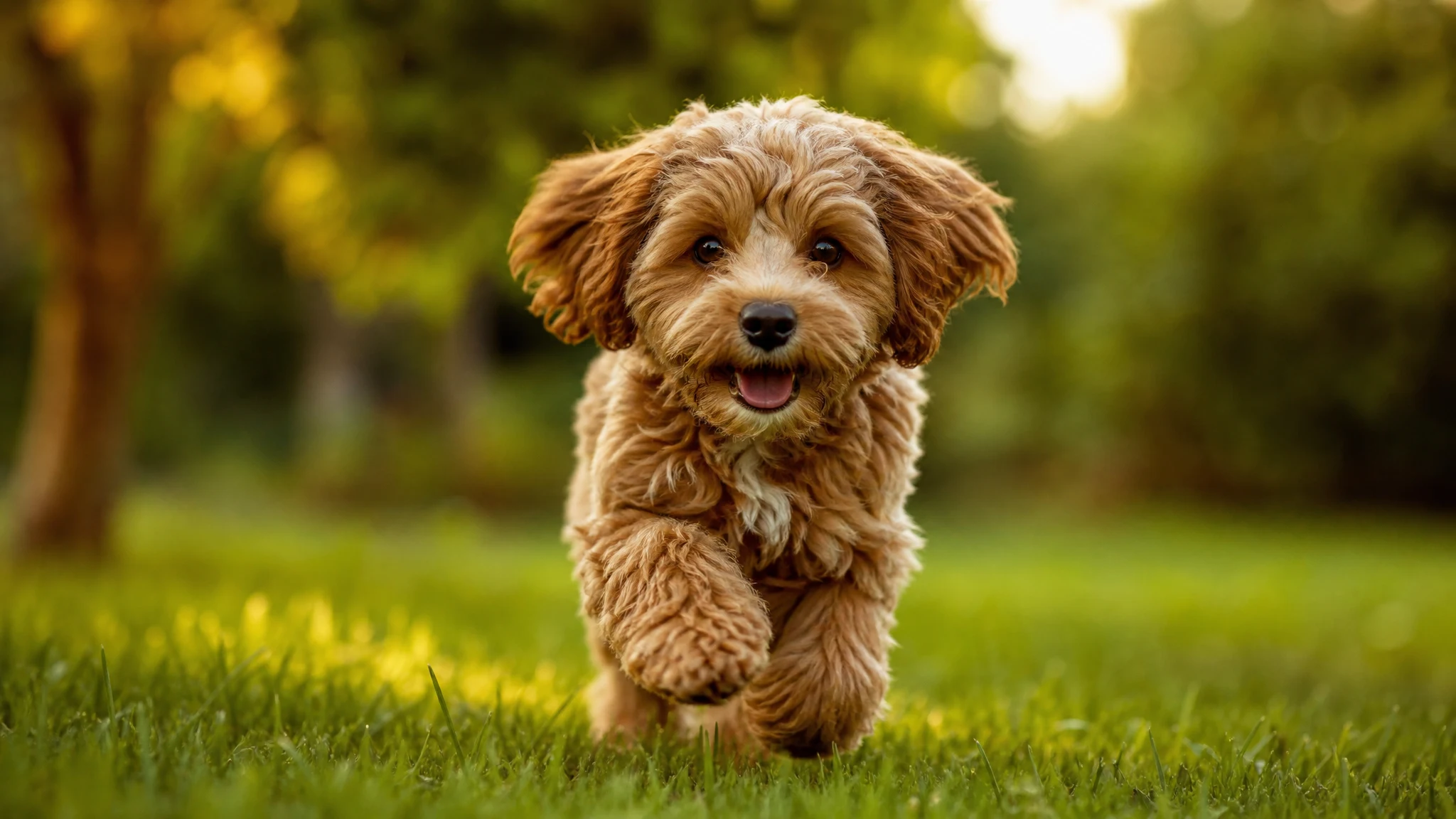
General training information. Every dog is an individual; for health or behavior concerns, see your veterinarian.
The Cavapoo is a companion dog first. It is a cross of a Cavalier King Charles Spaniel and a Poodle, usually a Toy or Miniature Poodle. Nobody bred it to herd sheep or haul sleds. Even so, a Cavapoo working dog can have a satisfying "job," and it usually looks like a training class, a game of agility on a small course, or a daily set of brain puzzles.
This guide shows you how to pick a sport, get ready, and start safely. It covers the main dog sports for Cavapoos, what you need, a numbered plan, mistakes to avoid and what you can reasonably expect. Individual dogs vary, so treat every point as a starting place and not a promise.
Why Cavapoo Sports Make Sense for This Cross
Two parent breeds explain most of the appeal. Petful describes the Cavapoo as highly trainable: intelligent from the Poodle side and eager to please from the Cavalier side. It responds well to positive reinforcement. Healthy Paws Pet Insurance adds that the breed is smart and responds to repetition and routine, and that patience helps.
The Poodle parent was originally a water retriever for waterfowl hunters, according to Wikipedia's Poodle entry. The Cavalier was bred as a companion lap dog. Healthy Paws says the Cavapoo was created to pair the Poodle's coat and intelligence with the Cavalier's gentle companion temperament. So the jobs that fit best are the ones that put a smart, people-loving dog to work next to its person.
Healthy Paws lists obedience and agility as sports for the Cavapoo, and says the Cavalier parent also does obedience, agility and rally, citing PetMD. That is a short list, and it is honest. Petful calls the Cavapoo a companion dog, not an athlete. So think friendly and fun, not elite competition.
The Sports and Jobs at a Glance
| Activity | What it is | Why it can suit a Cavapoo |
|---|---|---|
| Obedience | Precise, cue-based behaviors such as sit, down, stay, heel and recall | Builds on a trainable, eager-to-please dog. Listed for the breed by Healthy Paws. |
| Rally | You and your dog move through a course of signs, each showing a skill to perform | Lets you talk and cheer as you go. The Cavalier parent does rally, per PetMD via Healthy Paws. |
| Agility | Your dog runs a timed course of jumps, tunnels and other obstacles | Listed for the breed by Healthy Paws. Moderate energy fits a fun, low-pressure start. |
| Companion "job" at home | Daily structured tasks: fetching a toy by name, tidy-up games, short cue practice | Matches the breed's companion role and gives mental stimulation, which Purina Australia says the cross needs. |
The facts I can point to do not list scent work, therapy work or other activities for the Cavapoo, so I will not claim them here. If one of those interests you, ask a local club or instructor how they handle mixed-breed dogs.
What You Need Before You Start
- A well-fitted flat collar or a comfortable harness, plus a standard 6-foot leash. No prong, choke or shock tools, ever.
- Small, soft treats your dog loves, cut tiny. Petful notes weight gain from treats is a known challenge for the breed, so count them as part of daily food.
- A treat pouch or pocket, and a clicker if you like one.
- A non-slip mat or towel as a "place" target.
- Simple home props: a broomstick on two stacks of books for a very low bar, a blanket draped over chairs for a tunnel, and a cardboard box to practice stepping in.
- A quiet space with a safe floor, and 10 to 15 minutes at a time.
- A basic foundation in cues. If you have not built that yet, start with our complete guide to training a Cavapoo.
Step-by-Step: Getting Started with Cavapoo Sports
Step 1: Check with your veterinarian first
Before any sport, ask your vet whether your dog is fit for jumping, running and repeated turns. This matters for the Cavapoo because Petful lists mitral valve disease and syringomyelia from the Cavalier side, and progressive retinal atrophy and patellar luxation from the Poodle side. Elanco My Pet and I also names hip dysplasia, epilepsy and luxating patellas.
Your vet is the right person to judge your individual dog. Do not try to diagnose anything yourself, and ask the vet about any change in stamina, coughing or limping. If you are still choosing a puppy, the Cavalier King Charles Spaniel Club, USA lists health tests for Cavaliers, including a heart clearance from a board certified veterinary cardiologist, eye screening, patella evaluation and a hip X-ray submitted to the OFA. Elanco advises screening both parents of a Cavoodle puppy for inheritable conditions. Ask a breeder what testing was done on both parents.
Step 2: Match the activity to your dog's age
Petful says Cavapoos reach adult size around 9 to 12 months, and that puppies need short, frequent play and rest. It advises against forced running or long hikes on developing joints. Until your vet says the joints are ready, keep sport work to foundation skills on the ground: name response, sit, down, hand targeting and loose-leash walking. Leave jumping for later.
Step 3: Pick one starting sport
For most people, obedience or rally is the easiest door in. Both reward the skills you are already teaching and need little equipment. Agility is exciting but asks more of the body. Choose the one that fits your dog's age, your schedule and your local options. You can always add a second sport later.
Step 4: Build focus with short games
Every sport begins with attention. Hold a treat at your chest, wait for your dog to look at your face, mark the moment with a click or a happy "yes," and reward. Do ten repeats, then stop. Healthy Paws says this breed responds to repetition and routine, so a daily five-minute habit helps more than one long session a week.
Step 5: Teach the core cues with rewards
Work on these in order: sit, down, stay for a few seconds, come when called, and walk beside you on a loose leash. Reward the behavior you want and calmly reset when your dog gets it wrong. This is the approach in line with the American Veterinary Society of Animal Behavior (AVSAB). Never correct with leash jerks, scruffing or physical force. A dog who is afraid of making mistakes does not enjoy sports.
Step 6: Add one tiny sport skill at a time
For rally and obedience, practice turning, halting when you halt and moving through a small "course" of three household objects. For agility, begin on the ground. Let your dog walk over a flat ladder or boards, pass through a blanket tunnel and touch a target on a low platform. Keep every obstacle low and the footing secure. Raise difficulty only when your dog is relaxed and eager.
Step 7: Find a class or club
Look for a local training club or facility that offers obedience, rally or agility classes and uses reward-based methods. Visit first without your dog. Watch how the instructor handles nervous or excited dogs, and walk away from any place that uses shock, prong or choke tools or talks about "dominance."
The Cavapoo has no national breed club or registry-published standard, and it is not an AKC-recognized breed. For events, check directly with the American Kennel Club and any other organization you are considering to learn whether and how mixed-breed or crossbreed dogs can enter, and what the rules are for age, height and registration. Rules change, so rely on the organizer's current information, not on memory or a forum post.
Step 8: Practice with distractions, then try a fun match
Once your dog is steady at home, practice in a yard, then in a quiet park or class, then around other dogs. Healthy Paws and Elanco both describe the breed as generally sociable, and Elanco recommends early socialization. Sociable still does not mean calm everywhere, so build up slowly. When your instructor thinks you are ready, ask about a practice run or a fun match, if your club offers one. Treat the first outing as a field trip, not a test.
Step 9: Balance sport with daily life
Greencross Vets gives a general guide of about 30 to 60 minutes of moderate daily exercise, and Petful suggests two short-to-medium walks plus play. Sport sessions count toward that time, not on top of it. Keep rest days, watch your dog's weight, and keep a regular routine.
Tips for Better Sessions
- End on a win. Finish while your dog is still keen.
- Use the meal. Part of your dog's daily food can double as training rewards, which helps with the treat weight gain Petful warns about.
- Keep the coat in mind. Petful notes the coat mats easily and needs frequent brushing. Check for tangles around the legs and armpits, and groom before sessions so nothing pulls or scratches.
- Watch for stress. Lip licking, turning away or freezing means the task is too hard right now. Step back one level.
- Give your dog a "job" at home too. Petful says understimulated dogs may chew, so a short daily task can make the house calmer.
Common Mistakes to Avoid
- Starting jumps too early. Petful warns about stress on developing joints. Wait for your vet's approval.
- Treating a companion dog like an athlete. Petful describes the Cavapoo as a companion, not an athlete. Long, hard sessions can turn a keen dog off.
- Ignoring separation stress. Petful lists separation anxiety, with barking, chewing and house-soiling when left alone, as a known challenge. A sport does not replace gradual alone-time practice. If your dog struggles, talk with your vet or a reward-based trainer.
- Assuming every Cavapoo is the same. Healthy Paws says barking is generally low, while Greencross says Cavoodles may bark at strangers. Coats, energy and confidence vary, and Petful points out that quality varies by breeder because there is no breed standard.
- Skipping the basics. Sports are built on sit, down, stay and recall. Go back to the complete Cavapoo training guide if those are shaky.
- Using harsh tools or methods. They are not necessary and they can damage trust.
What Results to Expect
With regular, short, reward-based practice, many Cavapoos may become more focused and responsive within a few weeks, and some owners find the dog seems more settled at home after mental work. Progress may be faster for dogs with a strong food or play drive and slower for dogs who are shy or easily distracted.
Sports may also deepen your bond and give you a shared routine. They cannot be expected to fix every behavior problem, and they are not a guaranteed route to ribbons or titles. If your dog loves the game and stays healthy, that is a good result.